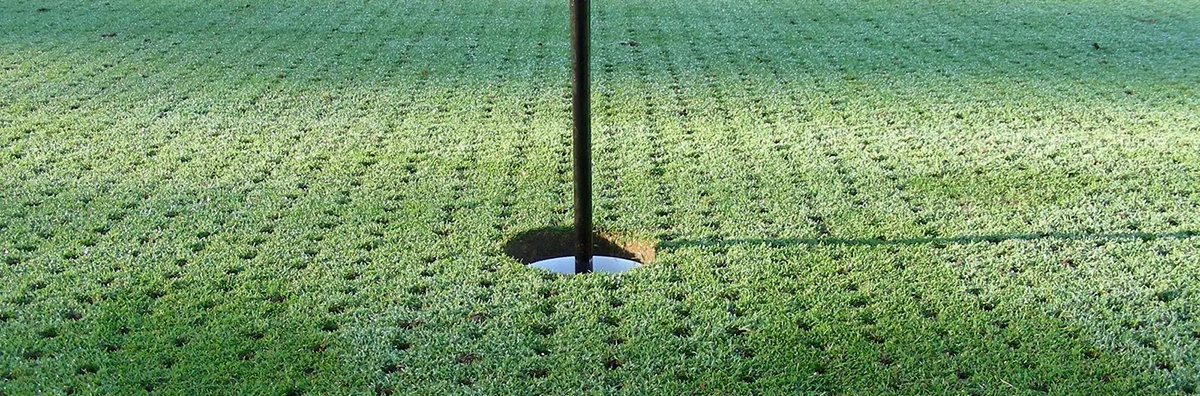


Summer is the season that tests creeping bentgrass. Fall is the season that determines whether it actually recovers.
After months of high temperatures, heavy traffic, elevated respiration, disease pressure, and constant stress management, many putting greens enter late summer with a significantly weakened root system. The turf may still look green from above. Below the surface, the plant is often running on fewer roots, reduced carbohydrate reserves, and diminished resilience.
For superintendents, the weeks following summer stress are one of the best opportunities all year to rebuild root mass, restore plant health, and set greens up for the season ahead.
Quick Takeaways
- Root systems shrink dramatically over summer even when the canopy still looks healthy, driven by heat, traffic, and disease pressure working against the plant at the same time.
- Fall cooling flips the plant from survival mode back into active growth, and that window is when most annual root recovery happens.
- Reducing stress, improving soil oxygen, and managing moisture carefully are the highest-impact practices during this period.
- Root recovery takes weeks to months, not days. Color comes back fast. Root mass doesn’t.
The Hidden Damage of Summer
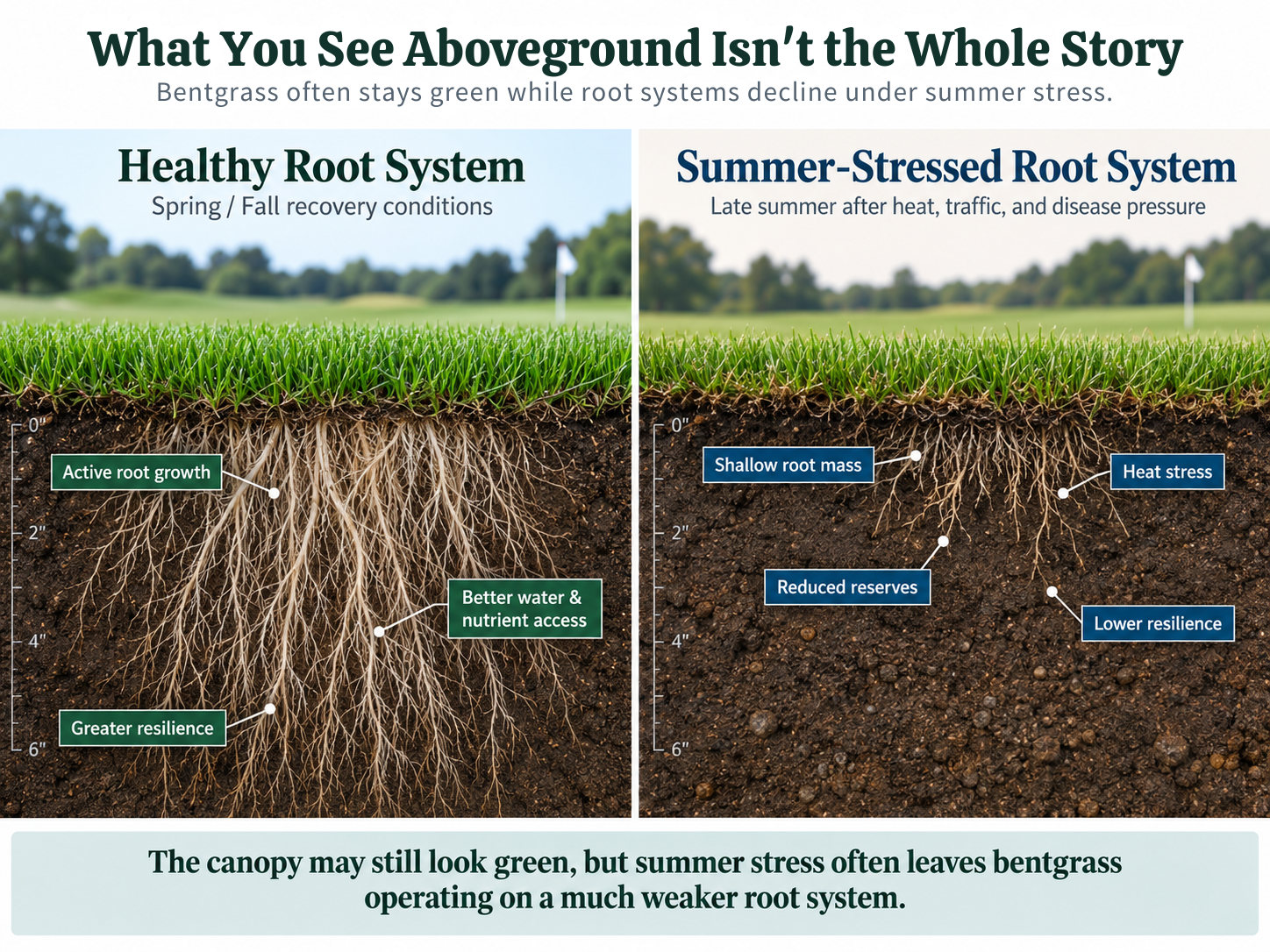
Through the summer, creeping bentgrass shifts most of its energy toward survival instead of growth. Soil temperatures above 70°F often exceed the optimal range for root development, causing roots to die back faster than new ones form.
Several factors compound the decline: low oxygen in saturated soils, daily mowing stress, tournament preparation, heavy golfer traffic, localized dry spot, anthracnose and dollar spot pressure, and frequent syringing cycles. By late August or early September, many greens are running on root systems that are a fraction of their spring depth. The turf survives because superintendents manage every detail through the stretch, not because the plant is thriving underneath.
Why Root Recovery Matters
Roots are the engine behind every healthy putting green. A deeper, healthier root system means better access to water deeper in the profile, improved nutrient uptake, greater drought tolerance, better traffic resistance, faster aerification recovery, and stronger resistance to next summer’s heat.
The goal this fall isn’t cosmetic. It’s not about making the turf look better for a few weeks. It’s about building a plant capable of handling next year’s stress before it arrives.
Fall Is Nature’s Reset Button
As temperatures cool, bentgrass naturally shifts back into active growth. Air temperatures between 60 and 75°F, soil temperatures below 70°F, cooler nights, increased soil oxygen, and reduced respiration all favor root development. Instead of burning stored carbohydrates just to survive, the plant starts producing and storing energy again, and root growth accelerates.
Every management decision made during this window affects how much recovery actually happens before winter shuts things down.
Five Practices That Maximize Root Recovery
1. Reduce Plant Stress
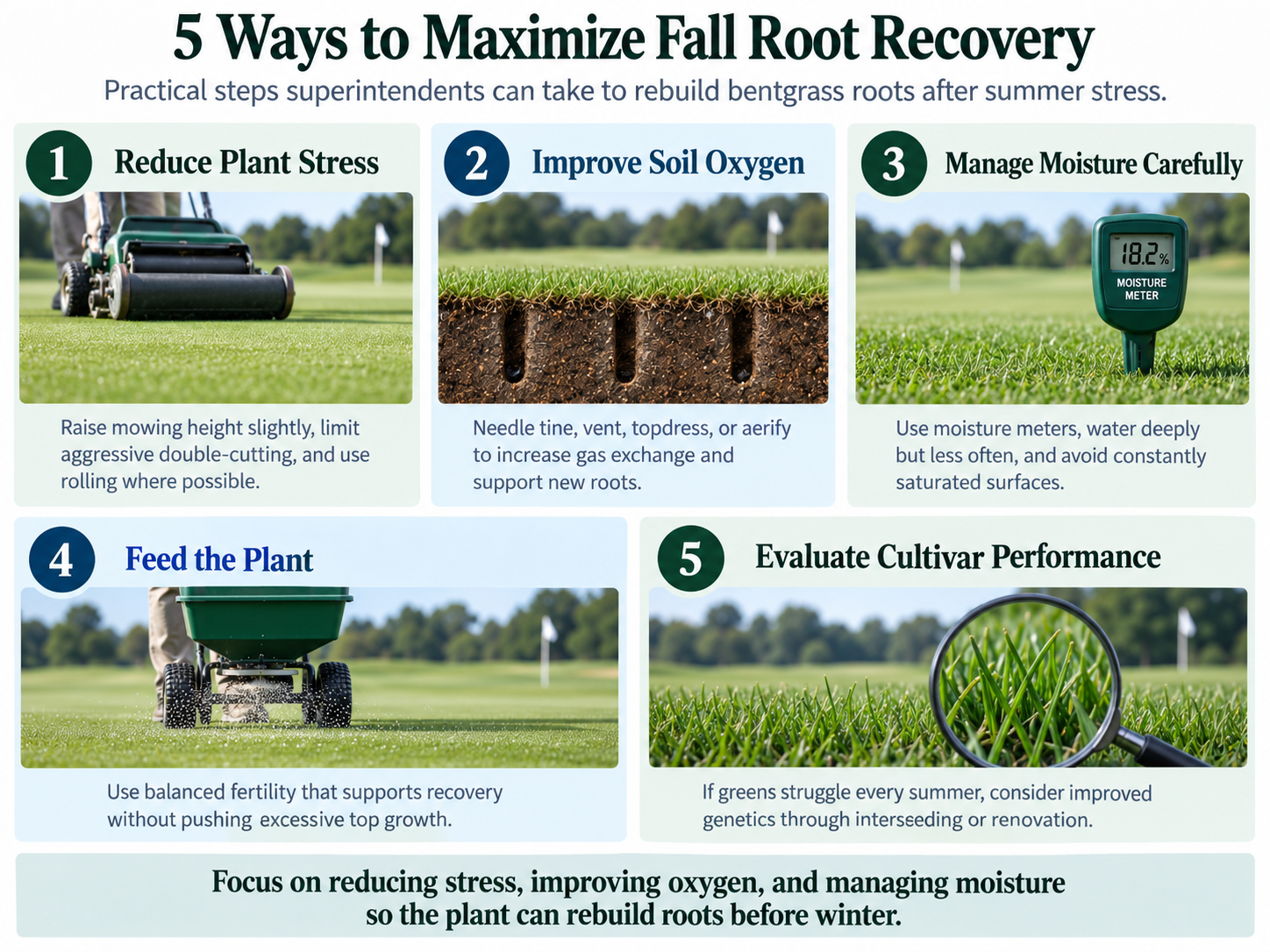
As conditions improve, gradually ease off practices that add unnecessary stress: raise mowing height slightly after major events, limit aggressive double-cutting, use rolling in place of extra mowing where possible, and avoid unnecessary mechanical stress. Less stress on the plant means more energy available below ground.
2. Improve Soil Oxygen
Healthy roots need oxygen. Compacted soils and excess moisture cut off gas exchange and limit development. Needle tining, venting, small solid tines, sand topdressing, and aerification all improve oxygen availability, and often trigger rapid root initiation once applied.
3. Manage Moisture Carefully
Many greens stay too wet after summer simply because irrigation schedules don’t get adjusted as temperatures drop. Use moisture meters daily, water deeply but less frequently, and allow slight drying between events. Roots grow where oxygen exists. They don’t grow where the surface stays constantly saturated.
4. Feed the Plant, Not Just Top Growth
Fall fertility should support recovery without pushing excessive leaf growth. Programs typically lean on moderate nitrogen, balanced potassium, calcium where needed, micronutrients based on soil testing, and silicon where appropriate to strengthen tissue. The target is sustainable recovery, not lush, soft growth that looks good and does little for the root system.
5. Evaluate Cultivar Performance
Not all bentgrass varieties recover the same way. Modern cultivars have been developed with improved heat tolerance, disease resistance, density, traffic recovery, and rooting characteristics. If certain greens struggle every summer without fail, fall is the right time to evaluate whether interseeding or renovation with improved genetics belongs in the long-term plan. Stronger genetics can reduce the stress-management burden while improving putting quality year-round.
Recovery Takes Time
One of the most common misconceptions is that roots recover as fast as leaves. They don’t. Turf color can improve within days. Rebuilding an extensive root system takes weeks, sometimes months. Patience matters here, and every week of favorable fall weather counts toward next year’s performance.
Looking Ahead to Next Summer
Superintendents who prioritize root recovery this fall tend to see fewer problems next July. Stronger roots mean better moisture management, improved firmness, greater drought tolerance, reduced disease susceptibility, faster recovery from stress, and more consistent ball roll through the season. The work done in autumn is frequently what determines how greens hold up during the hottest weeks of the following year.
The Tee-2-Green Difference
Recovery starts with genetics. As the oldest dedicated bentgrass company in the world, Tee-2-Green has spent decades developing creeping bentgrass cultivars built for championship putting greens, selected for turf quality, stress tolerance, and long-term performance under demanding conditions.
Whether establishing new greens, renovating older surfaces, or interseeding to improve stand quality, starting with proven genetics is what makes stronger roots and healthier turf possible year after year. Championship greens aren’t built in summer. They’re rebuilt every fall.
Frequently Asked Questions
Why does bentgrass lose root mass over summer?
Soil temperatures above 70°F push past the optimal range for root development, so roots die back faster than the plant can replace them. Low oxygen in saturated soils, heavy traffic, disease pressure, and frequent syringing all add to the decline, so by late summer many greens are running on a fraction of their spring root depth.
What conditions actually trigger fall root recovery?
Air temperatures between 60 and 75°F, soil temperatures below 70°F, cooler nights, and increased soil oxygen all shift the plant out of survival mode. Once respiration drops, the plant stops burning stored carbohydrates just to get by and starts storing energy again, which is what drives new root growth.
How can superintendents reduce plant stress heading into fall?
Raising mowing height slightly after major events, limiting aggressive double-cutting, using rolling instead of extra mowing, and avoiding unnecessary mechanical stress all free up energy the plant would otherwise spend on surviving mowing and traffic, redirecting it below ground instead.
Why does moisture management matter so much for root recovery?
Roots grow where oxygen is available, not where water sits constantly on the surface. Many greens stay too wet into fall simply because irrigation schedules don’t get adjusted as temperatures cool. Watering deeply but less frequently, with moisture meters guiding the schedule, keeps oxygen available in the root zone.
Why does the Willamette Valley produce most premium bentgrass seed?
Longer than most people expect. Turf color can bounce back within days, but rebuilding a full root system takes weeks to months. Every week of favorable fall weather adds to how well the green is set up for next summer, so patience through this stretch matters as much as the practices themselves.
Lew’s Final Thoughts
Fall root recovery is where next summer’s performance actually gets decided. The greens that come through July in good shape are usually the ones where someone did the unglamorous work in September and October. We’ll pick this thread back up in the next post and get into more specifics on putting these practices into a real fall program.
Want more turf management insights? Read more Lessons with Lew and talk with your local Tee-2-Green distributor.