

Summer is the season that separates good turf management from great turf management. Every superintendent faces the same pressures each year: heat, humidity, disease pressure, and golfers who expect fast, smooth greens no matter what the forecast. None of that changes. What separates a green that holds up from one that doesn’t, is the quality of the decisions made along the way, not a single product or a single perfect application.
There’s no miracle input that replaces good decision-making. Successful summer programs work because dozens of small, plant-focused choices get made correctly and consistently, not because of one standout practice. Think of the goal as protecting the plant rather than pushing performance. Reduce stress wherever possible, and creeping bentgrass will survive, recover, and keep producing the playing conditions golfers expect.
Quick Takeaways
- Water based on plant need, not the calendar. Check soil moisture before every irrigation decision.
- Raise mowing height slightly and substitute rolling for extra mowing to protect leaf tissue.
- Feed for resilience, not color. Frequent low-rate nitrogen paired with potassium, calcium, and silicon beats one big feeding.
- Walk every green every morning. Problems caught early need fewer inputs to fix than problems caught late.
Water Management That Protects the Rootzone

Irrigate by Plant Need
Water management is arguably the most important factor in summer bentgrass performance. Too little water leads to wilt and localized dry spot. Too much can be worse, cutting off soil oxygen and creating conditions where root diseases like Pythium root dysfunction take hold.
Skip the calendar. Monitor soil moisture with a handheld moisture meter, water deeply but only when the plant needs it, and spot water dry areas instead of running full cycles on every green. Short irrigation cycles improve infiltration on difficult soils, and every green should be evaluated individually, since conditions can vary dramatically across the course. Roots need oxygen as much as they need water, and every irrigation decision should protect both. Wet soil doesn’t always mean healthy turf.
Syringe to Cool the Canopy
Syringing lowers canopy temperature during extreme heat by cooling leaves through evaporation, not by watering the turf. Apply just enough to wet the leaf surface, focus on exposed and sunny areas first, and time it for peak afternoon heat so the water evaporates quickly. Done well, syringing can be the difference between a green that holds through a heat wave and one that doesn’t.
Mow and Roll to Protect Leaf Tissue
Raise Mowing Height Slightly
During stressful weather, every fraction of an inch matters. A small increase in mowing height gives the plant more leaf area for photosynthesis while reducing mechanical stress. Most golfers never notice a 0.010 to 0.020 inch change. The turf does.
Roll More, Mow Less
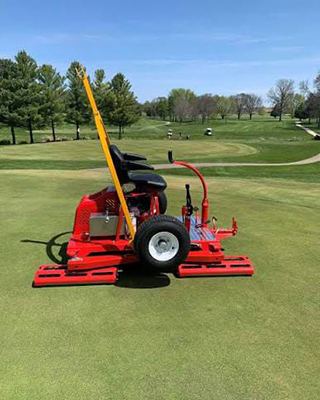
Rolling increases green speed while putting far less stress on the plant than repeated mowing. Substituting rolling for a second daily mow preserves leaf tissue during the exact weeks the plant can least afford to lose it. Reducing grooming and vertical mowing during stressful stretches protects even more leaf tissue when it matters most. Healthy turf produces more consistent putting surfaces over a full season than turf pushed too hard for short-term speed.
Manage Airflow and Rootzone Oxygen
Improve Air Movement
Trapped, humid air amplifies heat stress. Better airflow lowers humidity, dries the canopy faster, and helps the plant cool itself through transpiration. Run fans before conditions turn extreme, and remove or prune trees and vegetation that block prevailing wind. Sometimes better airflow does more for a green than another input would.
Vent the Rootzone
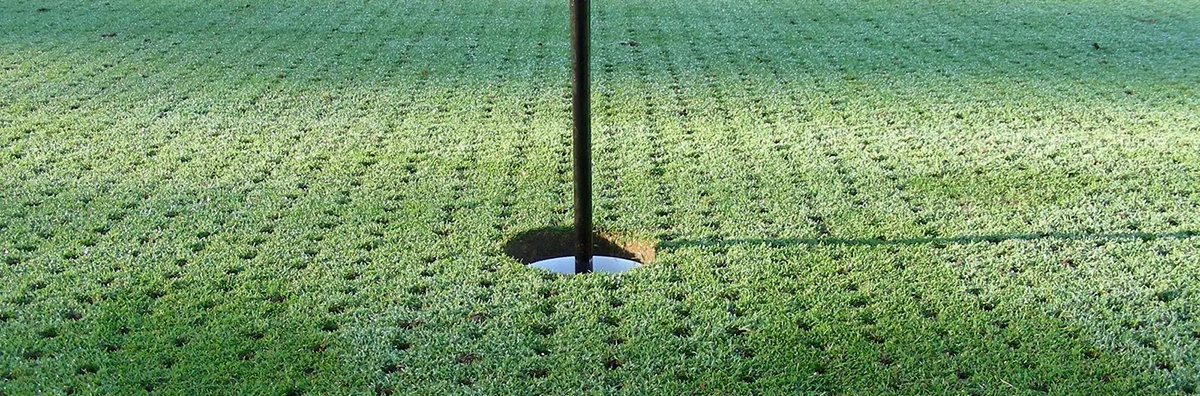
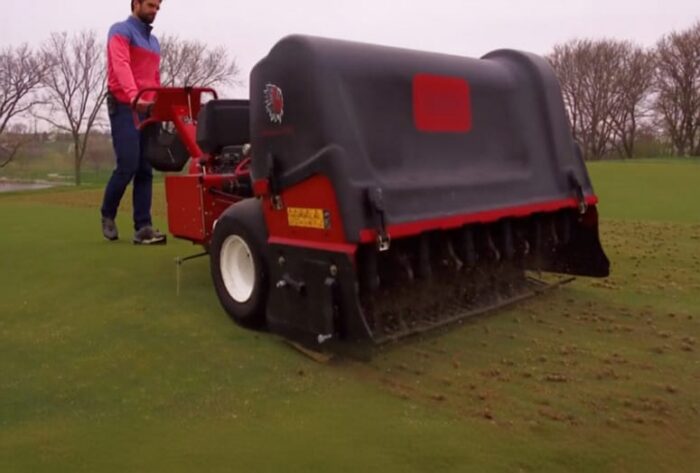
Compacted soils and excess moisture cut off oxygen exactly when roots need it most. Needle tining, solid tining, or other venting practices restore gas exchange with minimal disruption to play, improving infiltration, reducing surface sealing, and speeding recovery after heat events. Improving drainage where necessary and continuing light topdressing to dilute organic matter support the same goal. Healthy roots need oxygen every day, not just after aerification.
Feed for Resilience, Not Color
Large nitrogen applications produce soft, succulent growth that’s more vulnerable to disease, traffic, and heat stress. It also isn’t necessary. Frequent, low-rate nitrogen paired with adequate potassium, calcium for cell wall strength, and silicon for structural rigidity supports recovery without forcing growth the plant can’t sustain. The darkest green turf on the course usually isn’t the healthiest. Resilient turf is.
Watch the Plant Every Day
Walk Greens Every Morning
Nothing replaces a superintendent’s eyes. Bentgrass often hides problems well before they’re visible from a mower seat. Root decline can start weeks before discoloration shows, and carbohydrate reserves can already be depleted by the time symptoms appear. Daily walks catch wilt, footprinting, algae, early disease activity, surface softness, subtle color changes, reduced turf density, and excessive traffic before those issues become expensive to correct.
Adjust the Plan as Conditions Change
Following the same schedule regardless of weather is one of the costliest habits in summer turf management. Air temperature, soil temperature, humidity, wind, cloud cover, and the overnight forecast should all shape the day’s plan. The calendar should guide maintenance decisions. It shouldn’t make them.
The Five-Minute Morning Check
A short run-through before leaving the maintenance facility each day catches what a rushed morning misses.
- Are soil moisture levels where they should be?
- Is syringing likely today?
- Can rolling replace an extra mowing?
- Are any greens showing early signs of wilt?
- Do fans need to run today?
- Is venting scheduled ahead of the next heat wave?
- Are conditions shifting over the next 48 hours?
Answer these every morning and summer stops catching you off guard.
Play the Long Game
Summer management is about preserving plant health, not chasing perfection. There will be days when skipping a double cut, raising mowing height slightly, delaying grooming, or reducing traffic is the right call for the turf, even though golfers won’t notice the decision that day. Those small trade-offs are usually what determines whether greens are still healthy in late August or already worn down. These calls also go over better when golfers understand the reasoning, so a short explanation of why a temporary adjustment protects long-term green quality goes a long way.
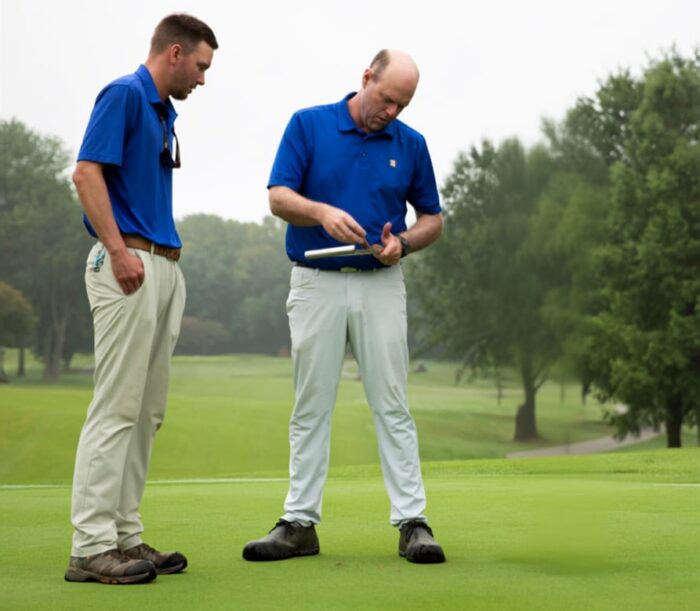
Protecting the plant today is what creates better playing conditions tomorrow.
Lew’s Final Thoughts
There’s no single practice that guarantees a green survives August. Heat stress is rarely caused by one factor, and it isn’t solved by one either. Successful summer programs combine irrigation, syringing, mowing and rolling decisions, airflow, rootzone oxygen, nutrition, traffic management, disease prevention, and consistent scouting, and each piece only carries a small part of the load on its own.
As John Wooden once said, “It’s the little details that are vital. Little things make big things happen.” That’s exactly how summer turf management works. Every small decision made in the heat of summer adds up to the health of the plant, and to the quality of the putting surface golfers walk onto the next morning.
Next time, I’ll look at one of the more promising tools in modern turfgrass management: how silicon can strengthen plant tissue and help bentgrass handle summer stress with more resilience.
Frequently Asked Questions
How often should I water bentgrass greens in summer?
There’s no fixed schedule. Water based on soil moisture readings and plant need, not the calendar. Deep, infrequent irrigation generally outperforms frequent shallow watering.
What’s the difference between syringing and irrigating?
Syringing cools the leaf surface through evaporation and uses minimal water. Irrigation delivers water to the root zone. They solve different problems.
Will raising mowing height hurt green speed?
Not if rolling compensates for it. A 0.010 to 0.020 inch increase is rarely visible to golfers, but it gives the plant meaningfully more leaf area for photosynthesis.
How much nitrogen is too much during heat stress?
Enough to push soft, succulent growth. Frequent, low-rate applications paired with potassium, calcium, and silicon support recovery without forcing growth the plant can’t handle.
What’s the single best thing I can do to protect greens during a heat wave?
There isn’t one. Summer results come from combining irrigation, syringing, mowing adjustments, airflow, venting, and nutrition, not from any single practice done well.
Want more turf management insights? Read more Lessons with Lew. Talk with your local Tee-2-Green distributor to purchase seed.