

Summer stress creates challenges for every turf manager. Heat, drought, traffic pressure, low mowing heights, recovery after aerification, and unpredictable weather can all place added strain on turfgrass performance. For golf course superintendents managing greens, tees, and fairways, maintaining healthy, resilient turf through stressful periods requires more than fertility and irrigation alone.
One increasingly valuable tool in modern turf management programs is the use of humic and fulvic acids. These naturally derived organic compounds help improve nutrient efficiency, support root development, and strengthen turf resilience when conditions become challenging.
Quick Takeaways
- Improve nutrient efficiency
- Support stronger rooting
- Encourage soil microbial activity
- Help turf recover from environmental stress
What Are Humic and Fulvic Acids?
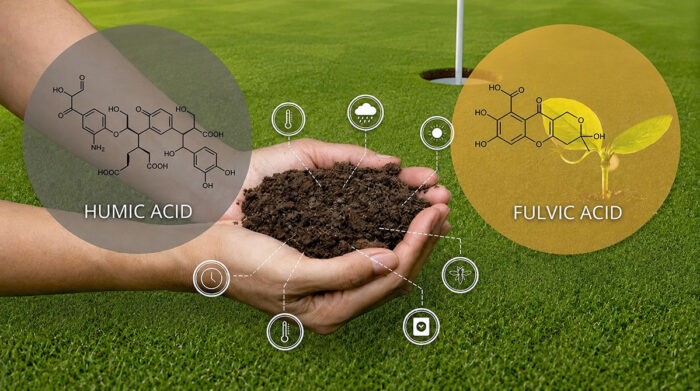
Humic and fulvic acids develop through the natural decomposition of plant and microbial materials over time. While closely related, each contributes differently to turf performance.

Humic Acid
Humic acid primarily supports the soil environment. It improves soil structure, water-holding capacity, and nutrient retention while encouraging microbial activity that contributes to healthier root zones.
Fulvic Acid
Fulvic acid works more directly at the plant level. Because of its smaller molecular structure, it can improve nutrient movement and nutrient availability within turfgrass plants.
Together, humic and fulvic acids create a valuable combination for improving turf performance and stress management.
How Humic and Fulvic Acids Help Turfgrass Handle Stress
Improve Nutrient Uptake
Fulvic acid can assist nutrient movement, helping turf make better use of fertility inputs. Improved nutrient efficiency may support turf color, vigor, and fertilizer performance while reducing nutrient loss potential.
Stimulate Root Growth
Strong roots become increasingly important during summer stress. Humic substances can encourage healthier root systems that help turf access moisture and nutrients more effectively during heat and drought periods.
Increase Soil Health
Humic acid supports soil structure, microbial activity, infiltration, and water retention. Compacted soils or high-traffic areas may especially benefit from improvements in overall rootzone conditions.
Enhance Stress Tolerance
Heat, traffic, aerification recovery, drought cycles, and seasonal pressure can challenge turf performance. Supporting nutrient efficiency and root health can help turf recover faster and remain more resilient.

Golf Course Applications
Golf course superintendents may see value across multiple playing surfaces. Greens experiencing summer bentgrass stress, tees recovering from concentrated traffic, and fairways navigating wet-dry cycles can all benefit from stronger soil and plant performance. Applications following aerification or during recovery periods may also fit well within broader agronomic programs.
Program Considerations
- Begin applications before peak summer stress develops
- Consider pairing with fertility programs
- Evaluate opportunities following aerification or stress recovery periods
- Focus on consistency rather than one-time rescue applications
- Follow labeled rates and product recommendations
Frequently Asked Questions
Can humic and fulvic acids replace fertilizer?
No. They work alongside sound fertility programs rather than replacing them.
When should superintendents apply humic and fulvic acids?
Preventative applications before stressful periods and consistent seasonal programs often provide the greatest value.
Are they beneficial on greens, tees, and fairways?
Yes. Application strategy may vary based on surface type, conditions, and management goals.
Lew’s Final Thoughts
As weather patterns become less predictable and stress management becomes increasingly important, humic and fulvic acids continue gaining attention across golf course management. When integrated alongside strong agronomic fundamentals, these tools can contribute to healthier roots, stronger recovery, and more resilient turf throughout the growing season.
Want more turf management insights? Read more Lessons with Lew and talk with your local Tee-2-Green distributor.