

Last post, I closed with a promise: a closer look at one of the more promising tools in modern turfgrass management, silicon, and how it helps bentgrass handle summer stress with more resilience.
Here’s that closer look.
Silicon has become one of the most talked-about tools in golf course turf management over the past several years. It isn’t considered an essential plant nutrient, but research keeps showing it improves creeping bentgrass’s ability to tolerate heat, drought, traffic, and oxidative stress.
For superintendents managing bentgrass through a tough summer, silicon is best viewed as a plant health enhancer, not a replacement for sound fertility, moisture management, and cultural practices.
Quick Takeaways
- Silicon strengthens cell walls and supports root health, helping bentgrass tolerate heat, drought, and traffic stress.
- Field research shows turf quality gains of 6–10% and root biomass gains of 20–33% with preventive use.
- Potassium silicate and stabilized monosilicic acid are the two most practical sources for a spray program.
- Start before stress develops. Rescue applications after turf has already declined show smaller results.
Why Silicon Matters
Creeping bentgrass takes on tremendous stress during summer months. High temperatures, limited oxygen in the rootzone, traffic, and inconsistent moisture all reduce plant vigor.
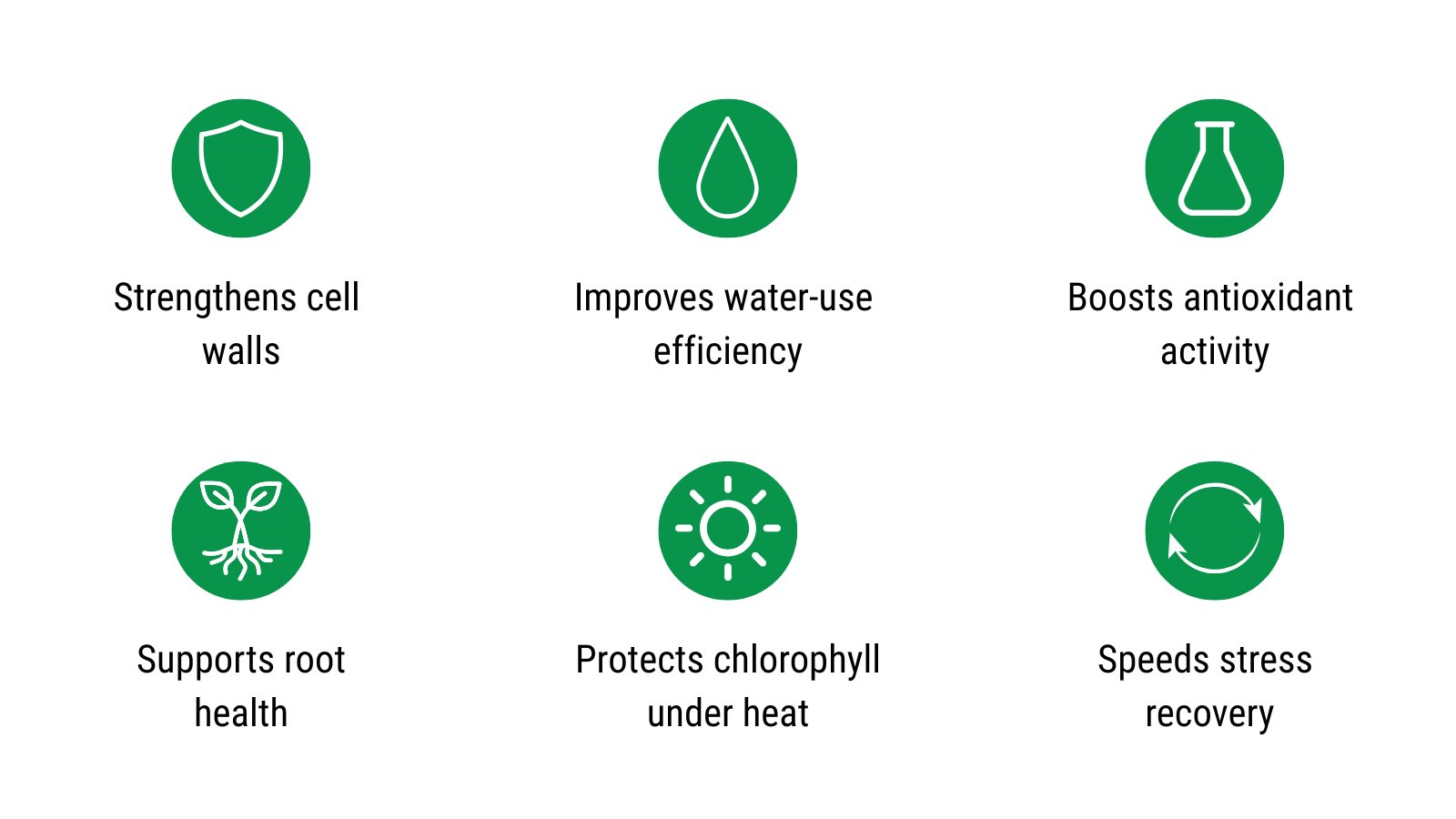
Silicon helps by:
- Strengthening cell walls
- Improving water-use efficiency
- Increasing antioxidant activity
- Supporting healthier root systems
- Protecting chlorophyll during heat stress
- Improving recovery after environmental stress
Recent field research at Virginia Tech found that silicon-treated bentgrass maintained higher turf quality, improved root growth, greater chlorophyll content, and stronger antioxidant activity during summer dry-down periods compared to untreated turf.
What Research Shows
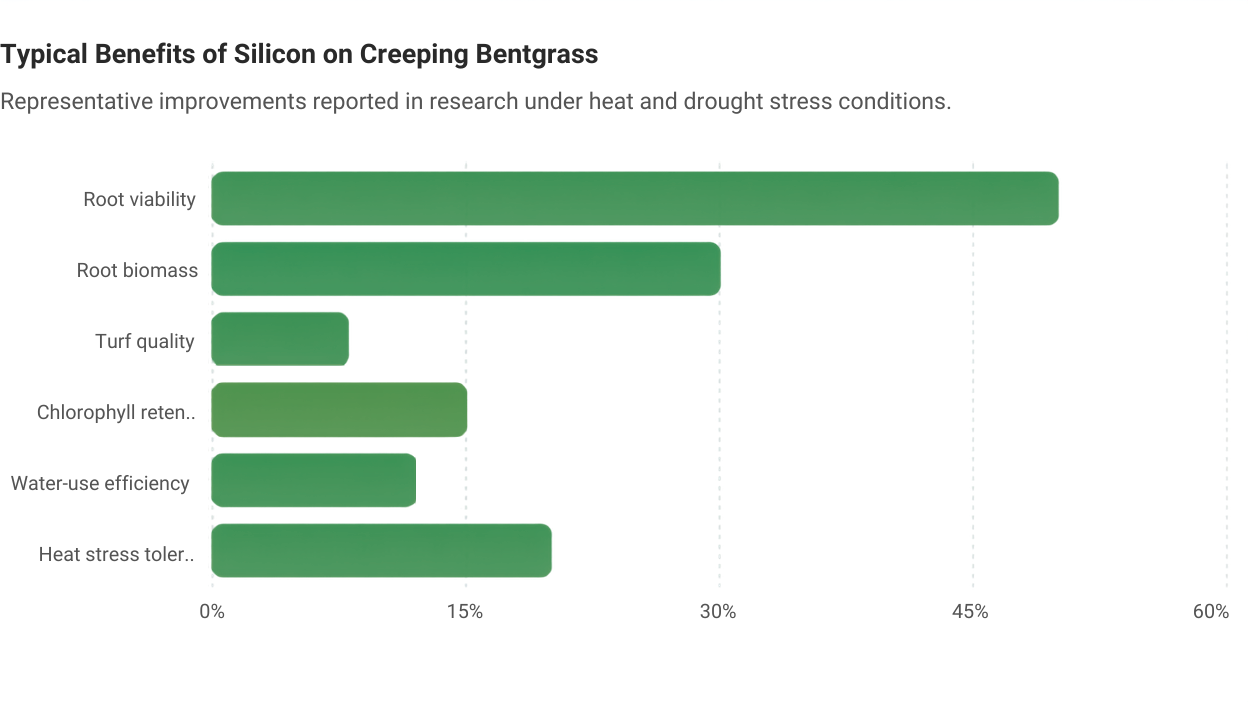
Field studies have reported improvements including:
- Turf quality increases of 6–10%
- Root biomass increases of 20–33%
- Root viability improvements exceeding 50%
- Increased leaf silicon concentration
- Reduced oxidative damage during heat stress
- Better color retention during drought
These benefits show up most clearly when greens face:
- Heat stress
- Localized dry spot
- Heavy traffic
- Mild drought
- Summer decline
The strongest responses generally occur when silicon applications begin before stress develops, not after turf starts to decline.
Practical Silicon Program
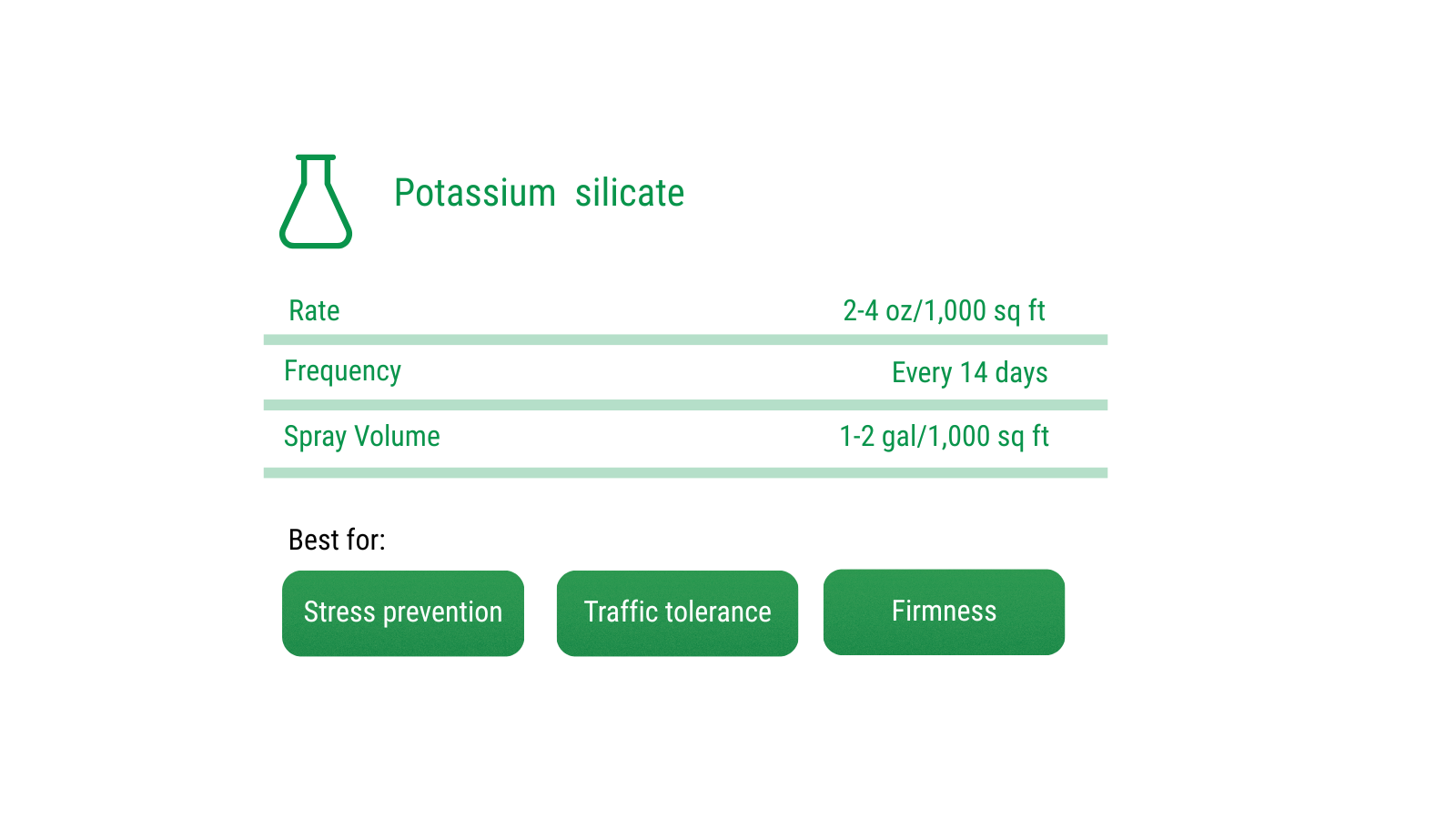
Potassium Silicate
One of the most common and economical silicon sources.
Suggested rate
2–4 oz per 1,000 sq ft, applied every 14 days.
Spray volume
1–2 gallons per 1,000 sq ft.
Excellent for:
- Summer stress prevention
- Traffic tolerance
- Maintaining firmness
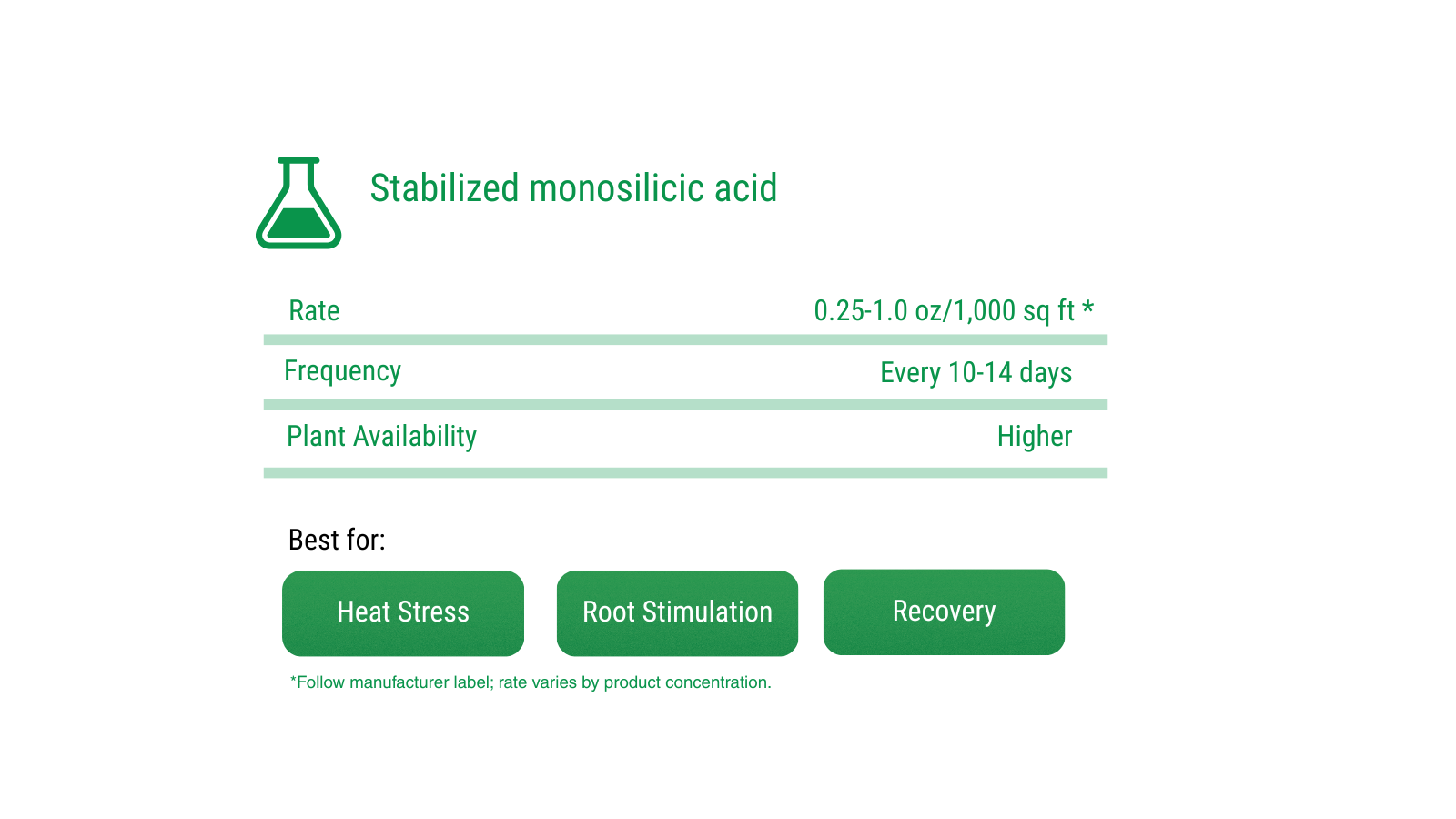
Stabilized Monosilicic Acid
Often provides greater plant availability because the silicon is already in a plant-available form.
Suggested rate
Follow manufacturer recommendations, typically 0.25–1.0 oz per 1,000 sq ft depending on product concentration, applied every 10–14 days.
Excellent for:
- Heat stress
- Root stimulation
- Summer recovery
Seasonal Program
Preventive applications consistently outperform rescue applications once turf is already under severe stress.
Tank Mix Considerations
Silicon generally works well with:
- Nitrogen fertilizers
- Iron
- Micronutrients
- Seaweed extracts
- Amino acids
Use caution when mixing with:
- Highly acidic products
- Calcium fertilizers
- Products that significantly lower spray solution pH
Always run a jar test before mixing unfamiliar products.
What Silicon Will Not Do
Silicon is not a cure-all. It cannot replace:
- Proper irrigation
- Good drainage
- Adequate potassium nutrition
- Proper mowing practices
- Disease management
- Sound aerification programs
Instead, think of silicon as another tool that increases the plant’s ability to withstand stress.
Is Silicon Worth the Investment?
For golf course putting greens, the answer is increasingly yes, particularly during stressful summer periods.
Research consistently shows improvements in plant physiology: stronger roots, enhanced antioxidant systems, and improved turf quality under drought and heat stress. Responses vary depending on environmental conditions and the silicon source used, but silicon has become a valuable addition to many modern bentgrass management programs.
Practical Superintendent Tips
- Start applications before summer stress arrives.
- Maintain a consistent 10–14 day interval.
- Silicon complements, but does not replace, a balanced fertility program.
- Combine silicon with proper moisture management for the greatest benefit.
- Evaluate results over an entire growing season rather than after one or two applications.
Lew’s Final Thoughts
Silicon won’t eliminate summer stress, but it can help creeping bentgrass tolerate it more effectively. By strengthening plant tissues, supporting root growth, and enhancing natural defense systems, silicon gives turf a better chance to maintain quality through heat, drought, and traffic.
For superintendents looking for another edge in maintaining firm, healthy, high-quality putting greens, a well-planned silicon program is a practical investment that can pay dividends throughout the season.
Frequently Asked Questions
Is silicon a replacement for fertilizer?
No. Silicon works alongside a sound fertility program. It doesn’t replace nitrogen, potassium, or other core nutrition.
When should I start a silicon program?
Before stress develops. Preventive applications ahead of summer heat consistently outperform rescue applications made after turf has already declined.
Which silicon source should I use, potassium silicate or stabilized monosilicic acid?
Both work. Potassium silicate is economical and effective for general stress prevention and firmness. Stabilized monosilicic acid offers greater plant availability and can be a stronger fit for heat stress and root stimulation. Many programs use one as a base and layer the other in during peak stress.
Can I tank mix silicon with other inputs?
Generally yes, silicon pairs well with nitrogen, iron, micronutrients, seaweed extracts, and amino acids. Use caution with highly acidic products or calcium fertilizers, and always jar test unfamiliar combinations first.
How long before I see results?
Evaluate over a full growing season rather than after one or two applications. The clearest gains show up in how turf holds up during heat, drought, and traffic, not in a single measurement.
Want more turf management insights? Read more Lessons with Lew and talk with your local Tee-2-Green distributor.