

If you’ve been following this series, you know where I stand on biostimulants. Humic and fulvic acids build the foundation. Phosphite strengthens disease resistance. Seaweed extract does something different. It works at the plant level to improve how bentgrass handles stress, recovers from injury, and stays healthy under difficult conditions.
It’s not a fertilizer. It doesn’t replace your fertility program. But once you understand what it does, it’s hard to build a serious summer stress program without it.
Quick Takeaways
- Activates the plant’s own stress-response systems
- Improves heat tolerance, root depth, and recovery speed
- Works synergistically with humic acids, fulvic acids, and fertility programs
- Most effective when built into the program before summer stress arrives
What Seaweed Extract Is
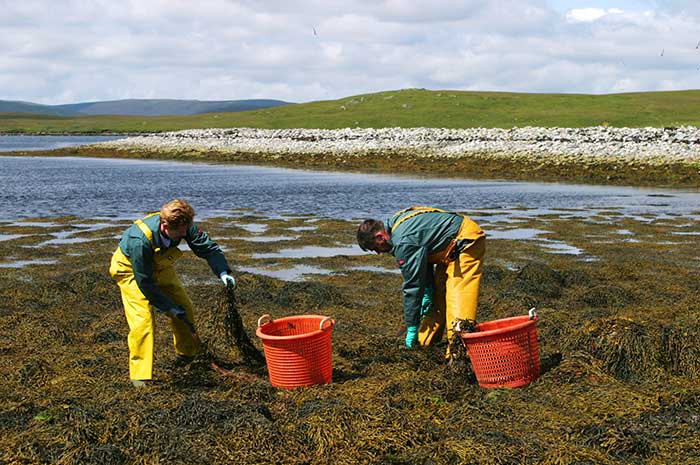
Ascophyllum nodosum harvested from North Atlantic coastal waters. The source material for most turf-grade seaweed extract products.
Seaweed extract is derived from brown marine algae, most commonly Ascophyllum nodosum, harvested from North Atlantic coastal waters. The extract contains naturally occurring bioactive compounds including cytokinins, auxins, betaines, amino acids, and antioxidants. These compounds work inside the plant, stimulating the physiological processes that help turfgrass tolerate and recover from stress.
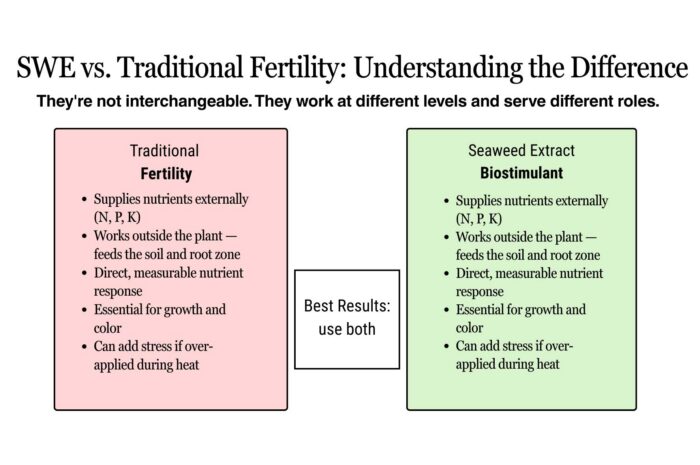
That’s the key distinction. A fertilizer supplies nutrients directly. Seaweed extract activates the plant’s own defense and recovery systems. The two approaches are complementary, and that’s why SWE programs perform better alongside a sound fertility program rather than in place of one.
Why Bentgrass Greens Respond Well
Bentgrass greens operate under conditions that create constant stress. Low mowing heights, heavy traffic, heat, and periodic drought push the plant hard. During the worst of summer, you’re managing root decline, reduced photosynthesis, and rising disease pressure all at once.
Seaweed extract addresses those challenges from the inside. It supports stronger cell walls, improves water retention within the plant, and increases antioxidant activity. In practice, that means better summer color, reduced wilt, improved density, and faster recovery after heat events.
Heat Stress Tolerance
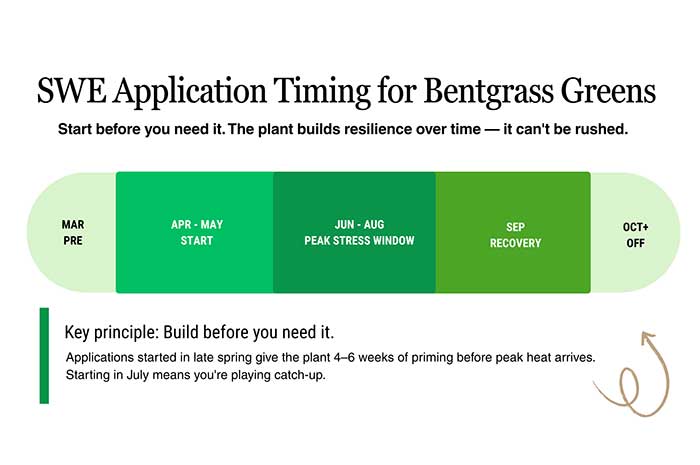
Summer color retention isn’t just an appearance issue. A plant holding color is photosynthesizing. A plant thinning under heat stress is burning reserves. SWE applications in late spring, before heat builds, help the plant prepare for what’s coming.
Programs that incorporate SWE consistently show faster recovery after difficult weather. Greens with SWE built in tend to bounce back after a hard week faster than greens without it. The difference isn’t always dramatic in mild conditions. It becomes obvious when the weather turns.
Root Development
Healthy roots are the foundation of summer management. SWE stimulates root growth and rooting depth, improving access to water and nutrients when the plant needs them most. A deeper root system tolerates drought better, recovers faster after aerification, and handles heavy play more effectively.
If you’re heading into summer with shallow roots, SWE is worth adding early. Trying to fix root health in August is a losing proposition.
Recovery After Cultivation
Greens take mechanical stress throughout the season. Mowing, rolling, verticutting, foot traffic. SWE supports faster metabolic recovery, which means less visual disruption after cultivation and stronger density during high-play periods. Before a member event or tournament prep, I want SWE in the program.
How SWE Fits Into a Summer Stress Program
Seaweed extract works synergistically with other biostimulants. The programs I’ve seen perform best through summer combine SWE with humic acids, fulvic acids, amino acids, and wetting agents. They complement each other rather than compete.
A few things worth understanding: SWE doesn’t force growth. That’s the point. It promotes balanced plant health, which lets you manage putting speed without adding stress through aggressive fertility. Consistent low-rate applications outperform occasional heavy ones.
And it works best when it’s built into the program before stress arrives, not applied reactively after damage is already showing.
Best Practices

Foliar applications every 7 to 21 days through the growing season. Consistency matters more than rate. Build the program before stress arrives.
Apply foliar every 7 to 21 days during the growing season. Time applications before anticipated stress events. Combine with other biostimulants rather than using SWE in isolation. Keep rates low and consistent.
The most common error with biostimulants is treating them reactively. By the time you’re applying SWE to a stressed green, you’ve already given ground. Build it in from the start of the season.
Frequently Asked Questions
How is seaweed extract different from humic acid?
They work at different levels. Humic acid primarily improves soil structure, cation exchange capacity, and nutrient availability in the root zone. Seaweed extract works at the plant physiological level, stimulating stress-response mechanisms, cell wall development, and root growth. They’re complementary. Many programs use both, and there’s good reason for that.
When should I start applications in the season?
Before summer stress arrives. In most climates, that means beginning in late spring as temperatures start climbing. Building the program early gives the plant the best chance of maintaining health through the stress period. Waiting until July is better than nothing, but you’ve left benefit on the table.
Will SWE push unwanted growth on my greens?
No, and that’s one of its advantages over aggressive nitrogen programs. SWE promotes balanced plant health and stress tolerance rather than vegetative growth. You can support plant resilience without sacrificing putting speed.
Does the source of seaweed matter?
Ascophyllum nodosum is the most widely researched brown seaweed for turfgrass use, and most of the trial data available is based on it. Look for products that clearly identify their seaweed source and extraction method. Cold-press extraction generally preserves more of the bioactive compounds than heat extraction. Not all seaweed extract products are equivalent.
Can I use SWE to support recovery after aerification?
Yes, and this is one of the most practical applications. Aerification is a significant stress event. SWE applied in the week before and after aerification supports faster metabolic recovery and helps the plant rebuild density more quickly.
Lew’s Final Thoughts
Seaweed extract has earned its place in modern bentgrass management. It won’t fix problems caused by poor agronomic fundamentals, and it’s not a substitute for a sound fertility program. But as a consistent part of a summer stress plan, it gives bentgrass greens a real advantage in holding quality through difficult conditions.
The supers I’ve seen produce the most consistent greens through summer are running programs. They’re not reacting to problems. SWE is one of those tools that works best when it’s built in before stress arrives. Give it a full season. You’ll see the difference.
Want more turf management insights? Read more Lessons with Lew and talk with your local Tee-2-Green distributor.